

What is AI Compliance? A Deep and Complete Information for Every Industry and people

Introduction: AI is Everywhere But Is It Safe, Ethical, and Legal?
Artificial Intelligence is no longer limited to companies.
Today, every industry, From hospitals to hotels, from schools to supermarkets, from factories to financial institutions, has integrated AI into daily operations.
Examples:
-
Hospitals use AI for diagnosis.
-
Banks use AI for fraud detection.
-
Retail stores use AI for demand forecasting.
-
Construction companies use AI for project scheduling and safety monitoring.
-
Manufacturing plants depend on AI-driven automation and predictive maintenance.
-
Government services use AI for citizen support and identity verification.
-
HR departments use AI for candidate screening.
-
Hotels use AI chatbots for guest service.
-
Education systems use AI for adaptive learning.
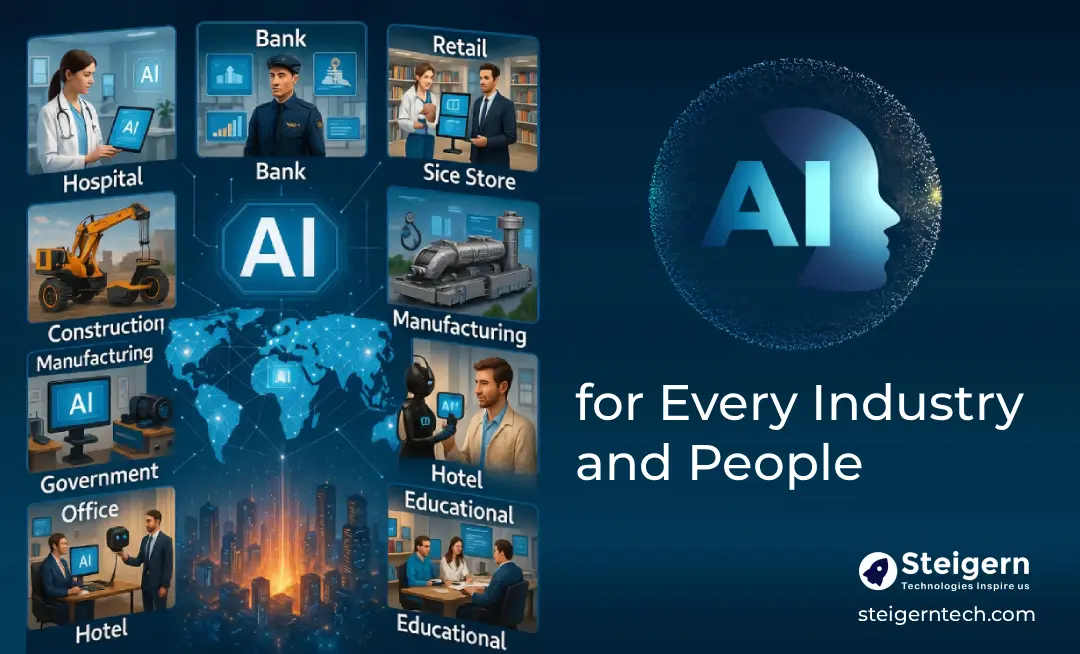
As AI becomes embedded in society, the risks also grow:
-
Privacy violations
-
Bias and discrimination
-
Security breaches
-
False predictions
-
Harmful decision-making
-
Lack of transparency
-
Ethical misuse
This is why AI Compliance has become a global necessity, Not just for tech companies, but for every organization on the planet that uses or depends on AI.
What is AI Compliance?
AI Compliance refers to the set of rules, regulations, ethical principles, operational guidelines, and technical standards that ensure AI systems are:
-
Safe for human use
-
Legally compliant with national and global laws
-
Ethical and fair to all users
-
Transparent and explainable
-
Secure and protected from misuse
-
Responsible and accountable
AI compliance answers the question:
Is our AI behaving the way it should – ethically, safely, and lawfully – across all situations?
It applies to every industry, whether or not the company is “tech-focused”.
Why AI Compliance Matters for All Industries (Not Just I.T)
Every sector uses AI differently, and the risks differ accordingly.
Below are industry-wise explanations to show why compliance is essential beyond I.T
AI Compliance in Major Industries
1. AI for Healthcare Industry
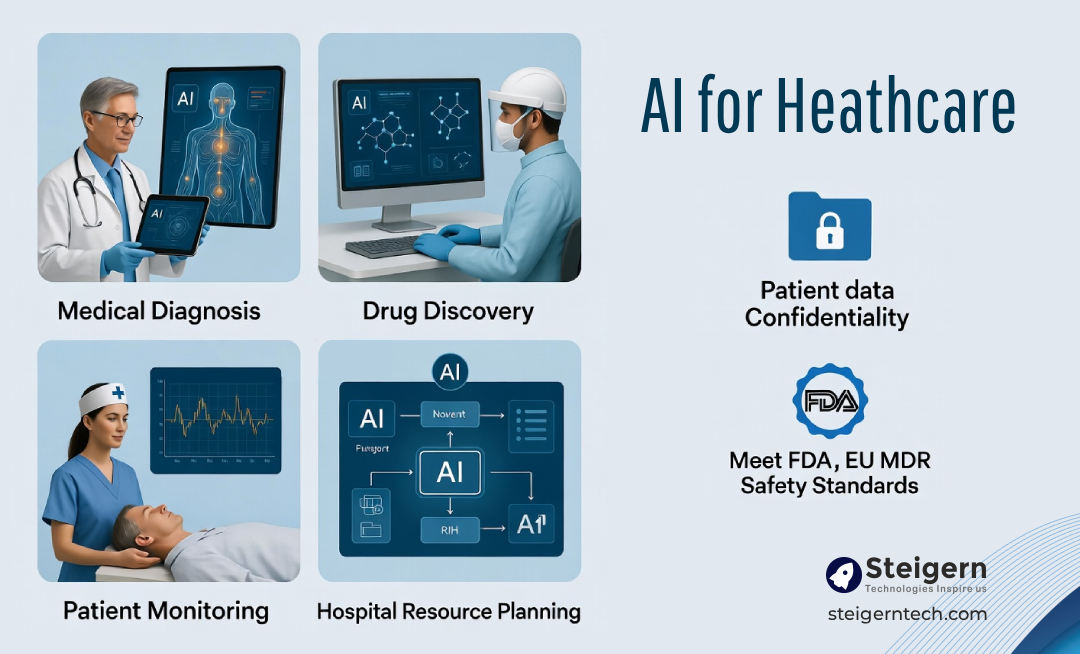
AI is used for:
-
Medical diagnosis
-
Drug discovery
-
Patient monitoring
-
Hospital resource planning
Why compliance is critical:
-
Wrong AI decisions can risk human life
-
Patient data must remain confidential
-
Medical devices must meet safety standards (FDA, EU MDR)
AI Compliance ensures medical AI systems are accurate, safe, transparent, and privacy-protected.
2. AI for Finance and Banking
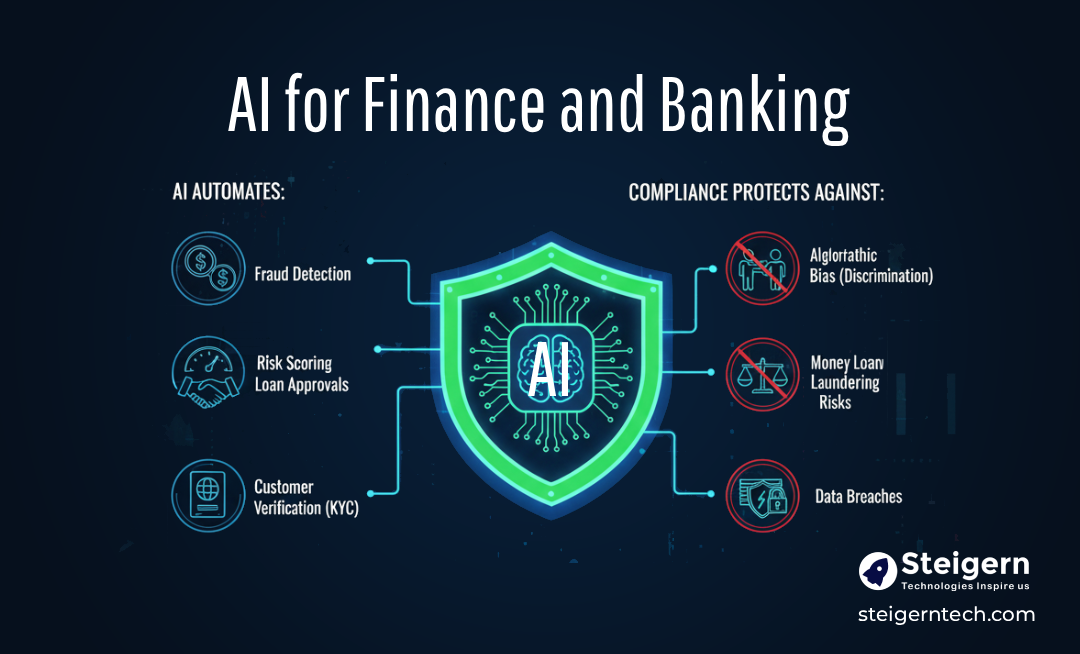
AI automates:
-
Fraud detection
-
Risk scoring
-
Loan approvals
-
Customer verification (KYC)
Compliance protects against:
-
Algorithmic bias (discrimination)
-
Unfair loan decisions
-
Money laundering risks
-
Data breaches
Financial AI must follow strict regulations like:
-
EU AI Act
-
PSD2
-
Basel rules
-
RBI guidelines (India)
3. AI for Manufacturing and Industrial Automation
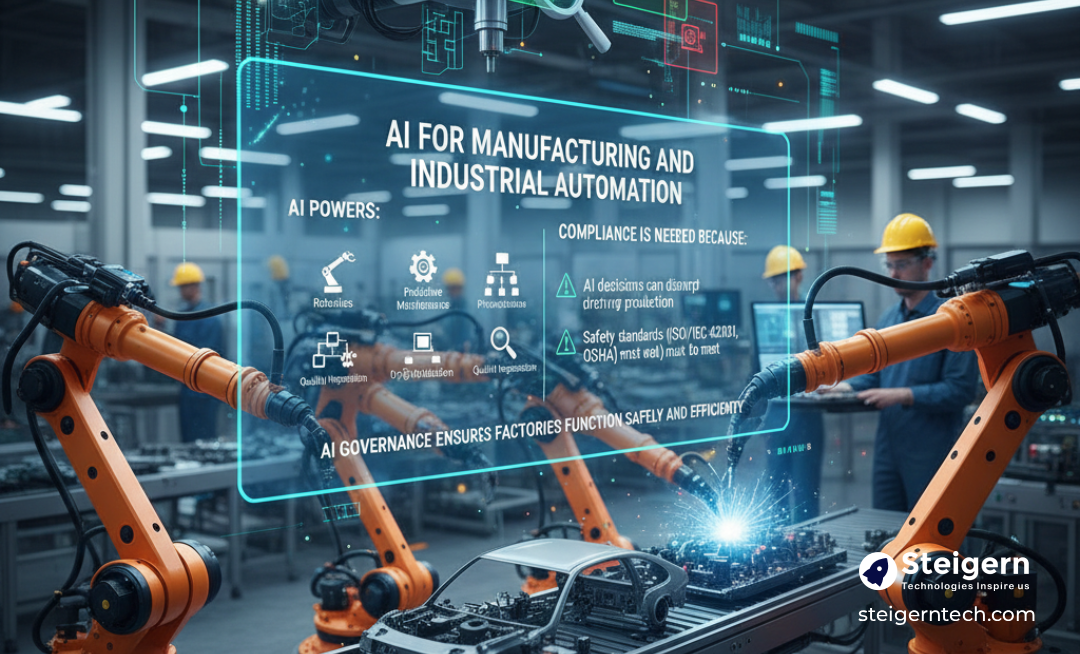
AI powers:
-
Robotics
-
Predictive maintenance
-
Process optimization
-
Quality inspection
Compliance is needed because:
-
AI decisions can disrupt production
-
Industrial accidents may occur
-
Safety standards (ISO/IEC 42001, OSHA) must be met
AI governance ensures factories function safely and efficiently.
4. AI for Retail and E-Commerce
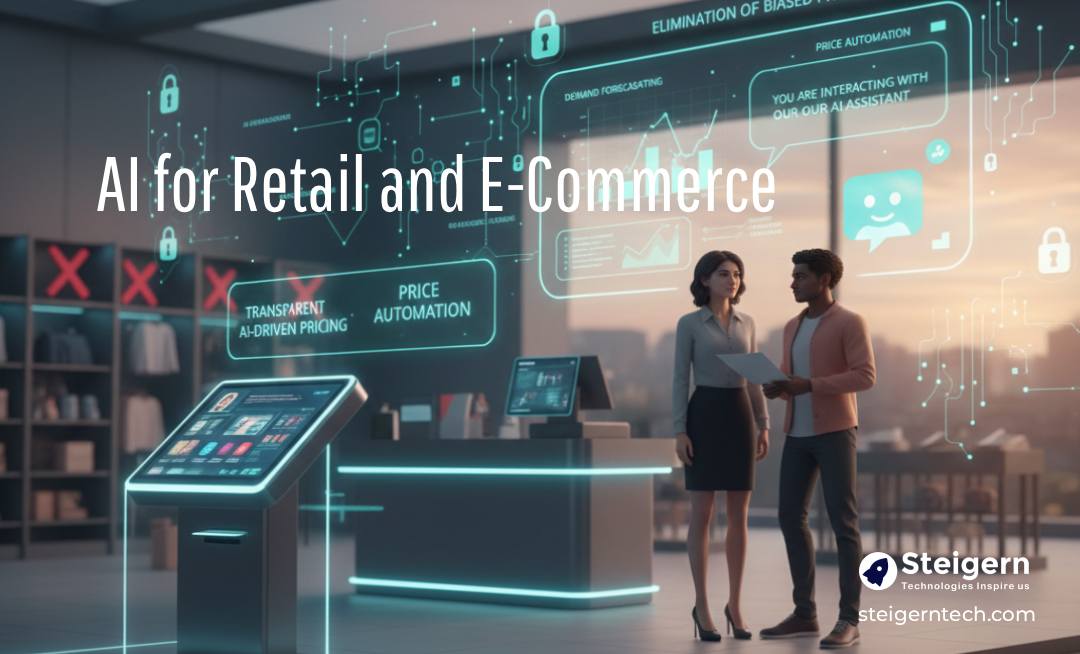
AI used for:
-
Demand forecasting
-
Recommendation engines
-
Price automation
-
Chatbots for customer service
Compliance ensures:
-
Transparent AI-driven pricing
-
Ethical personalization
-
No misuse of customer data
-
Eliminating biased product visibility
Customers must always know when they are interacting with AI.
5. AI for Education
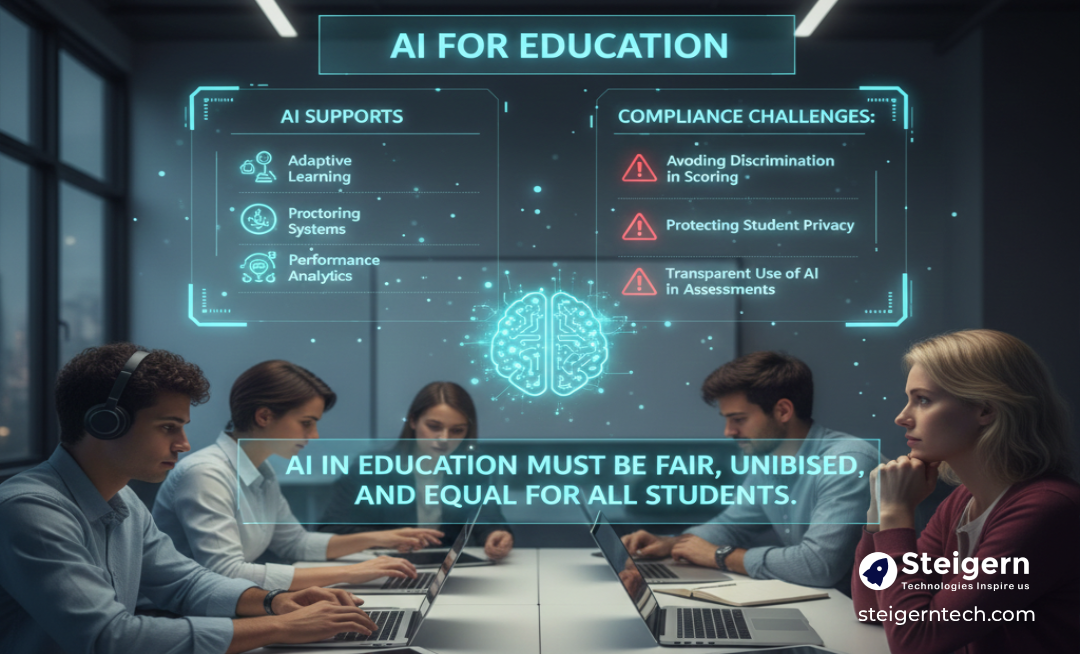
AI supports:
-
Adaptive learning
-
Proctoring systems
-
Performance analytics
Compliance challenges:
-
Avoiding discrimination in scoring
-
Protecting student privacy
-
Transparent use of AI in assessments
AI in education must be fair, unbiased, and equal for all students.
6. AI for Government, Smart Cities and Public Sector
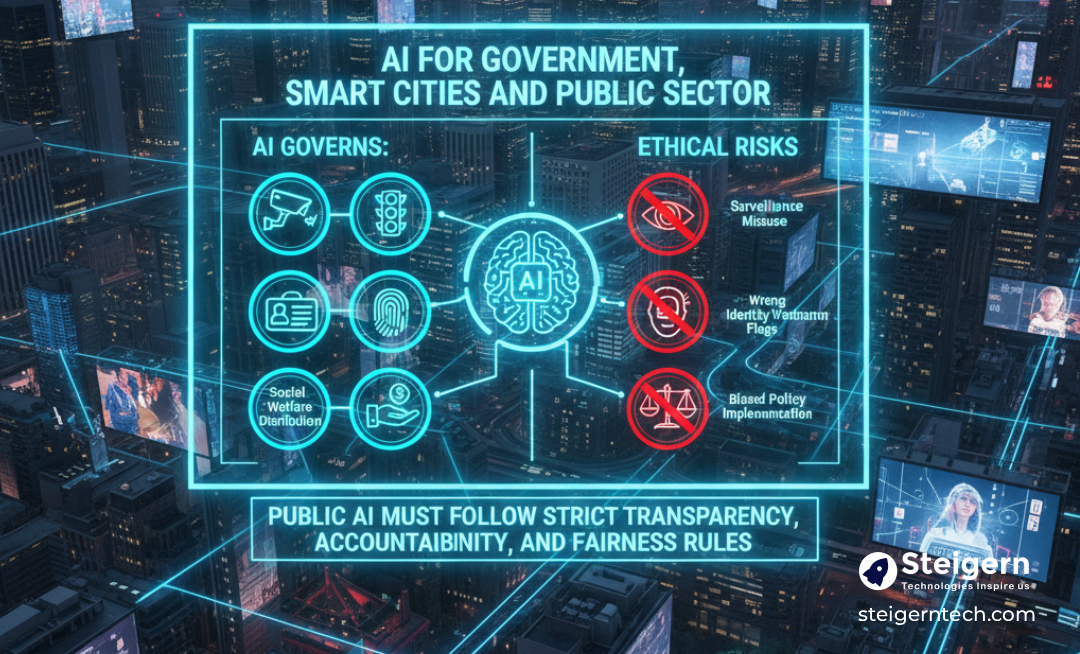
AI governs:
-
Public safety monitoring
-
Traffic management
-
Citizen verification
-
Social welfare distribution
Ethical risks:
-
Surveillance misuse
-
Wrong identity verification
-
False criminal flags
-
Biased policy implementation
Public AI must follow strict transparency, accountability, and fairness rules.
7. AI for Construction and Real Estate
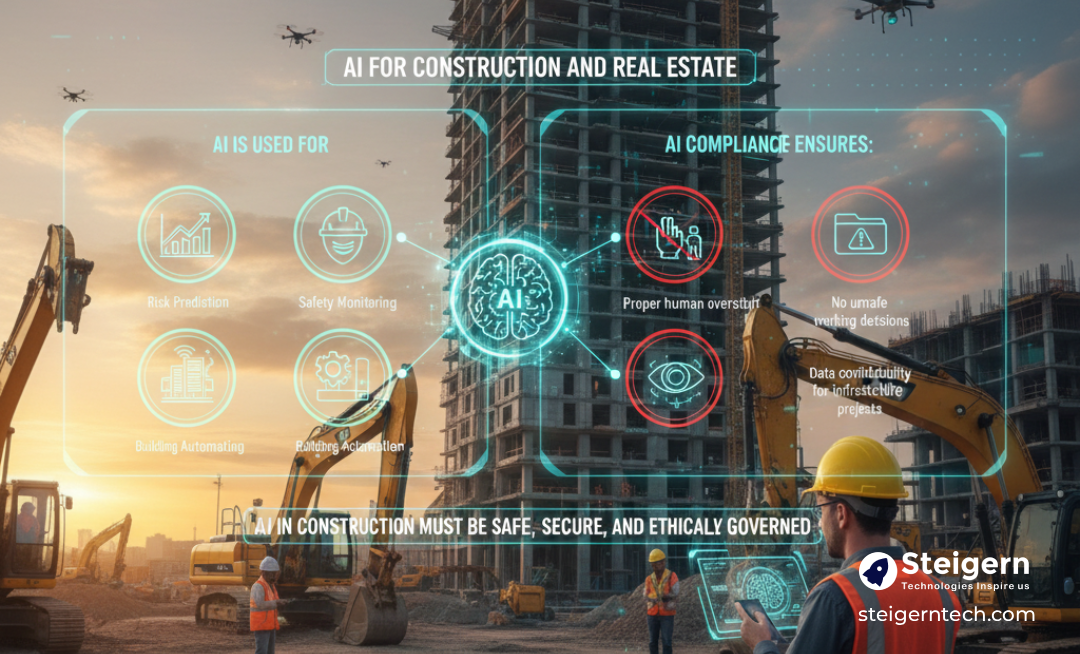
AI is used for:
-
Risk prediction
-
Safety monitoring
-
Project planning
-
Building automation
AI Compliance ensures:
-
No unsafe working decisions
-
Proper human oversight
-
Data confidentiality for infrastructure projects
8. AI for Transportation, Logistics and Supply Chain
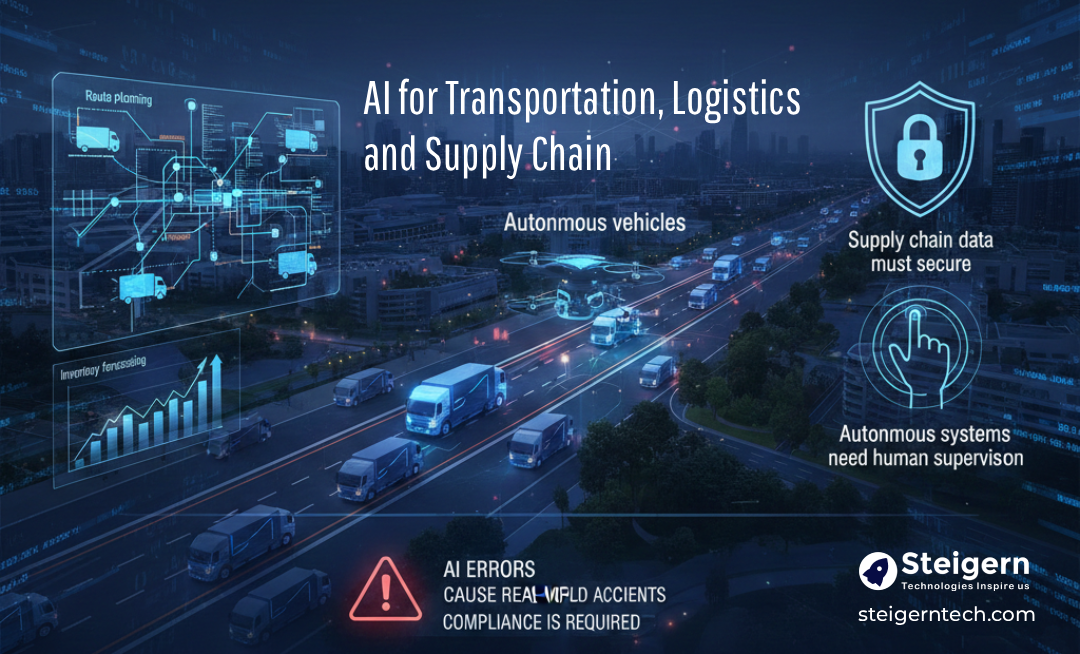
AI automates:
-
Route planning
-
Inventory forecasting
-
Fleet management
-
Autonomous vehicles
Compliance is required because:
-
AI errors can cause real-world accidents
-
Supply chain data must be secure
-
Autonomous systems need human supervision
9. AI for HR, Recruitment and Corporate Operations
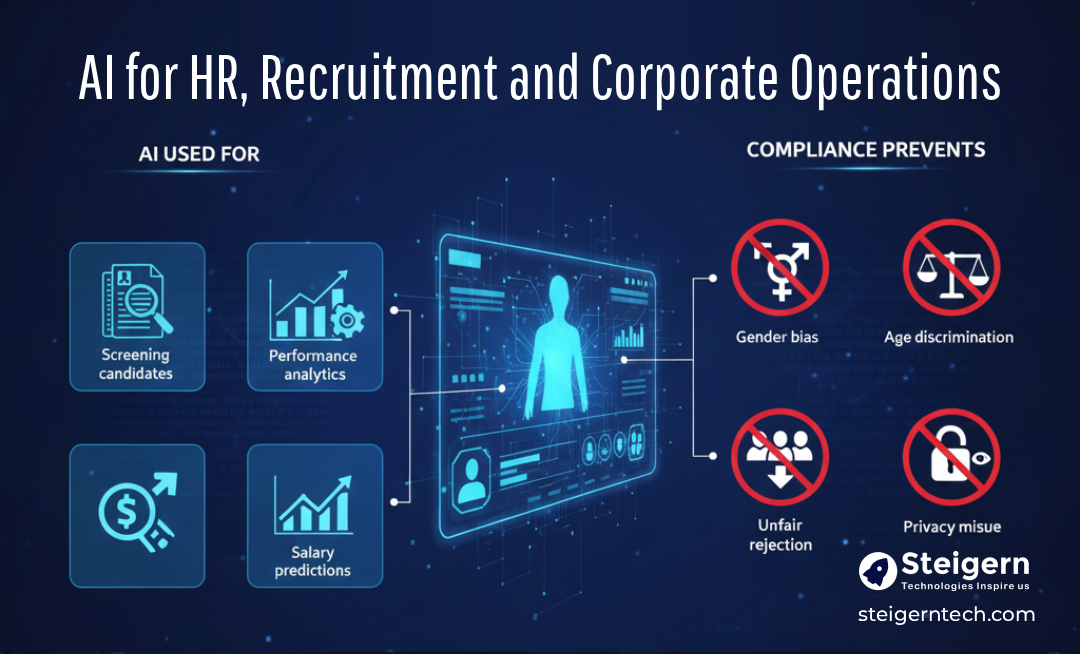
AI used for:
-
Screening candidates
-
Performance analytics
-
Salary predictions
Compliance prevents:
-
Gender bias
-
Age discrimination
-
unfair rejection
-
Privacy misuse
AI systems must be transparent and non-discriminatory.
Core Pillars of AI Compliance
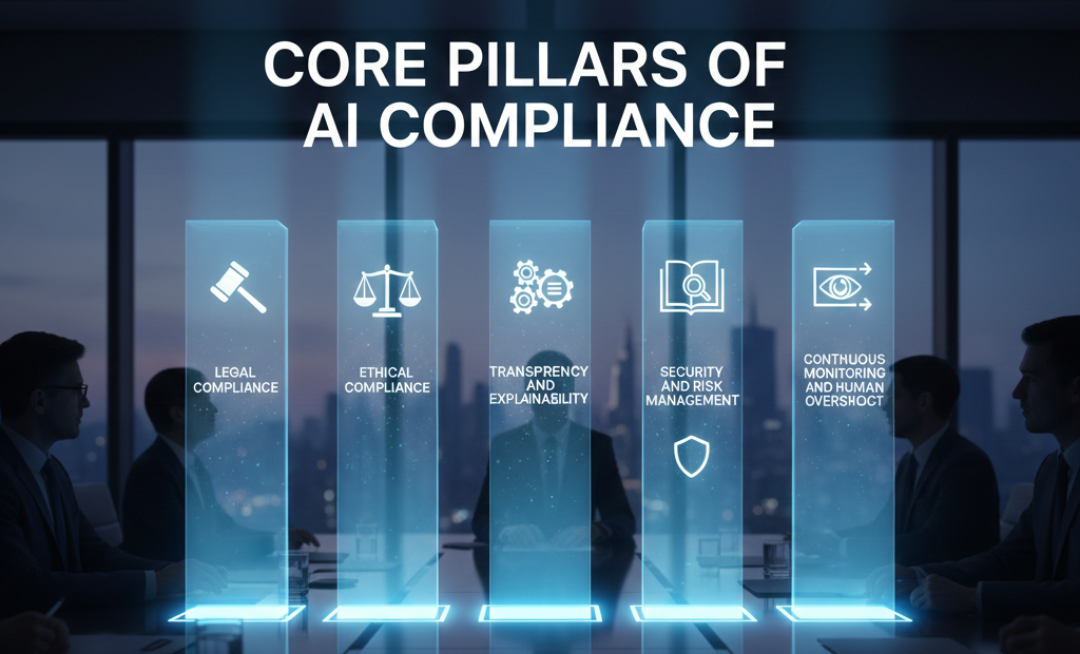
AI Compliance is built on 7 major pillars.
Let’s explore each one thoroughly.
1. Legal Compliance
AI must follow:
-
National AI laws
-
Data protection laws
-
Sector-specific regulations
-
Cybersecurity laws
This ensures AI is operating within legal boundaries.
2. Ethical Compliance
AI should:
-
Protect human rights
-
Avoid harm
-
Treat all people fairly
-
Remain transparent and accountable
This builds public trust.
3. Data Privacy Compliance
AI systems must:
-
Collect only required data
-
Take user consent
-
Anonymize data
-
Prevent unauthorized access
This helps avoid privacy violations.
4. Algorithmic Fairness
AI should not discriminate against:
-
Gender
-
Age
-
Race
-
Nationality
-
Religion
-
Disability
-
Income group
Fairness testing and bias correction are mandatory.
5. Transparency and Explainability
Users must know:
-
How AI works
-
Why decisions were made
-
What data was used
Industries like healthcare and finance require full explainability.
6. Security and Risk Management
AI systems must be protected from:
-
Hacking
-
Data manipulation
-
Prompt injection
-
Model poisoning
Security audits are essential.
7. Continuous Monitoring and Human Oversight
AI models must be monitored over time to ensure:
-
Accuracy
-
Stability
-
Safety
-
Compliance with new laws
Humans should always have ultimate control.
Global AI Regulations That Affect All Industries
Notable regulations worldwide:
EU AI Act (Europe)
First global law categorizing AI by risk levels.
GDPR
Focus on data privacy and AI profiling transparency.
India DPDP Act
Regulates digital personal data.
US AI Executive Order
Covers safety, fairness, and accountability.
ISO Standards
ISO/IEC 42001 – AI Management System
ISO 23894 – AI Risk Management
Every industry deploying AI must follow applicable laws.
Why AI Compliance is Difficult for Many Companies
-
Complex global laws
-
Lack of AI experts
-
Legacy systems
-
Fast-changing regulations
-
Difficulty explaining AI decisions
-
Bias hidden in training data
-
Security vulnerabilities
-
Cost of continuous auditing
This is why companies are now hiring AI Compliance Officers, similar to Cybersecurity or Data Privacy specialists.
How Any Industry Can Successfully Implement AI Compliance
Step 1: Identify where AI is used
Across departments, tools, operations, and customer touchpoints.
Step 2: Conduct a risk assessment
Check for privacy, ethical, operational, and legal risks.
Step 3: Apply global regulatory requirements
Based on region and industry.
Step 4: Create an AI governance framework
Policies for data usage, human oversight, transparency, and monitoring.
Step 5: Build documentation & audit trails
Explain every decision, dataset, and change.
Step 6: Train your employees
Ensure everyone understands responsible AI practices.
Step 7: Monitor continuously and improve
AI is not “set and forget”—it evolves over time.
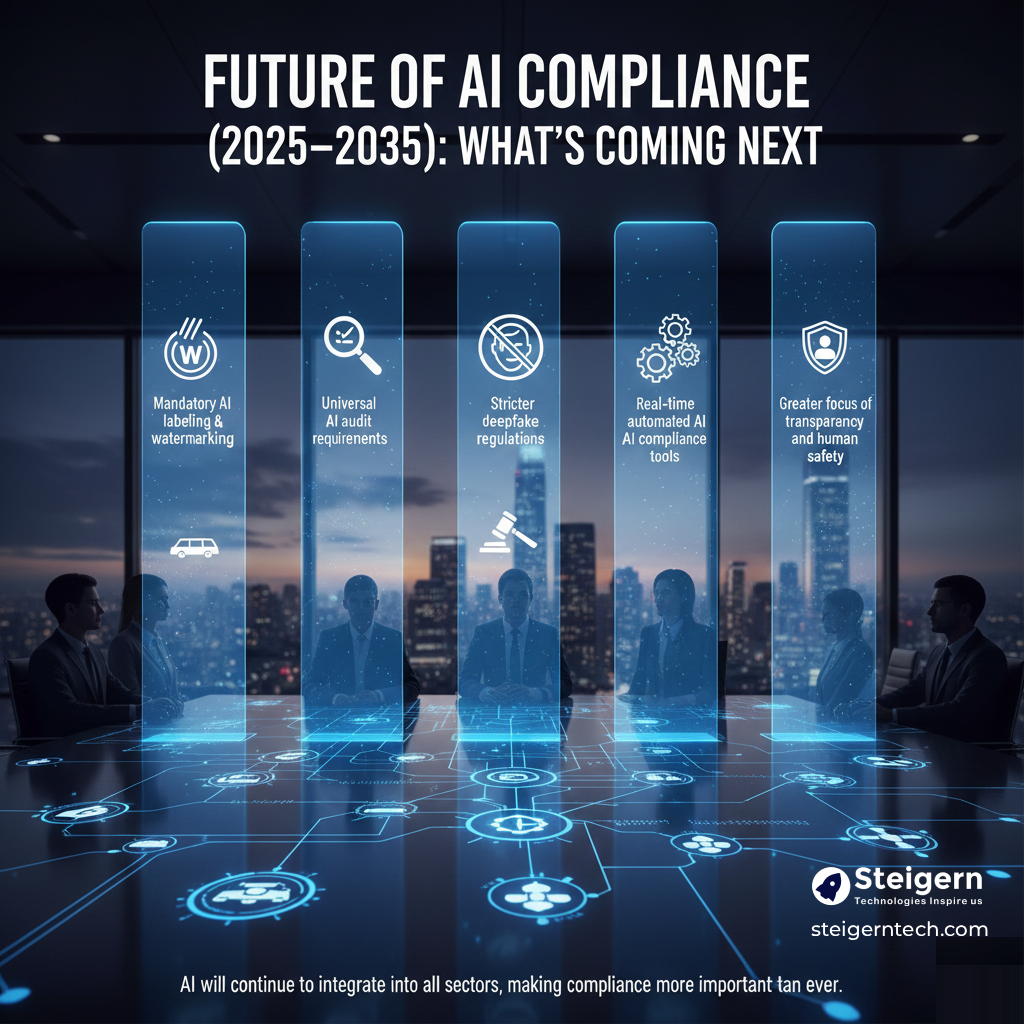
Future of AI Compliance (2025–2035): What’s Coming Next
-
Mandatory AI labeling & watermarking
-
Universal AI audit requirements
-
More accountability laws
-
Stricter deepfake regulations
-
Cross-industry ethical frameworks
-
Real-time automated AI compliance tools
-
Greater focus on transparency and human safety
AI will continue to integrate into all sectors, making compliance more important than ever.
Highlights
AI Compliance is no longer a technical concept limited to IT teams.
It is a cross-industry, organization-wide responsibility that ensures AI is safe, transparent, ethical, fair, and legally sound.
Whether you belong to healthcare, manufacturing, retail, logistics, hospitality, education, finance, or public services—AI compliance protects your customers, employees, business, and society at large.
In a world driven by automation and intelligence, the companies that embrace responsible and compliant AI will be the ones that succeed, scale, and earn long-term trust.
Our AI and Automation Services
To help industries adopt safe, compliant, and future-ready AI systems, we offer end-to-end AI implementation services, covering strategy, development, deployment, and continuous monitoring. Our expertise spans AI automation, machine learning development, AI governance, AI compliance, predictive analytics, and generative AI solutions, enabling organizations across IT and non-IT sectors such as manufacturing, healthcare, finance, logistics, education, retail, and government to transform operations with intelligent, ethical, and secure technologies. We build AI systems that align with global standards like the EU AI Act, GDPR, DPDP Act, ISO/IEC 42001, ensuring your business deploys AI responsibly without legal or ethical risks.
Beyond consulting, we design and deliver AI-powered web and mobile applications, intelligent chatbot systems, computer vision solutions, predictive analytics dashboards, and custom enterprise AI models tailored to specific industry needs. Our automation capabilities help companies streamline workflows, reduce manual tasks, enhance decision-making, and accelerate digital transformation using AI-driven automation, RPA + AI, smart data processing, and AI-powered enterprise assistants. Whether you are modernizing existing systems or building intelligent products from scratch, we help you implement AI that is scalable, transparent, and aligned with long-term growth.
With a strong focus on responsible AI, data privacy, and secure model deployment, we partner with organizations to build AI ecosystems that are compliant, efficient, and innovation-ready. Our goal is to ensure every business-IT or non-IT can use AI confidently and ethically while unlocking new opportunities for automation, efficiency, and intelligence.